








- Psalmody: Psalm 43:1–2a; 3a; Psalm 143:9a, 10a; 18:48; Psalm 129:1–4; Psalm 9:1a; 119:17, 25b; 1 Corinthians 11:24b, 25b
- Lection: Genesis 22:1–19; Hebrews 9:11–15; John 8:46–59a
In the Name of the Father and of the ✠ Son and of the Holy Spirit. Amen.
Beloved in the Lord, on this day in which you began the Divine Service by praying, “Judge me, O God,” you do well to pay attention to what you hear and learn in this holy place, whether it be pondering upon certain words of God for the first time or as reminder for a countless number of times now. The Lord has commanded that you offer your bodies as living sacrifices of thanksgiving as you come here physically, but also that you offer up your heart and soul by controlling your mind and paying attention to what He says to you. Do not grow lackadaisical about the activity of and your involvement in worship. Far too important matters transpire where God takes your sins and leaves behind Him a blessing of forgiveness, much needed, as Lent has taught you about the forces of darkness against which you daily do battle. The beginning of the season has had you reflecting upon the sacrifice, and power, of the Lord Jesus Christ as He has vanquished all your foes and now gives you life in His Name. For the provision that He gives richly and regularly, the mid-Sunday of Lent last week brought refreshment and reminding calls to rejoice in the Lord. This week, we return again to the full realization of our wilderness and what it cost the Son of God for Him to redeem us out of our hellacious destiny.
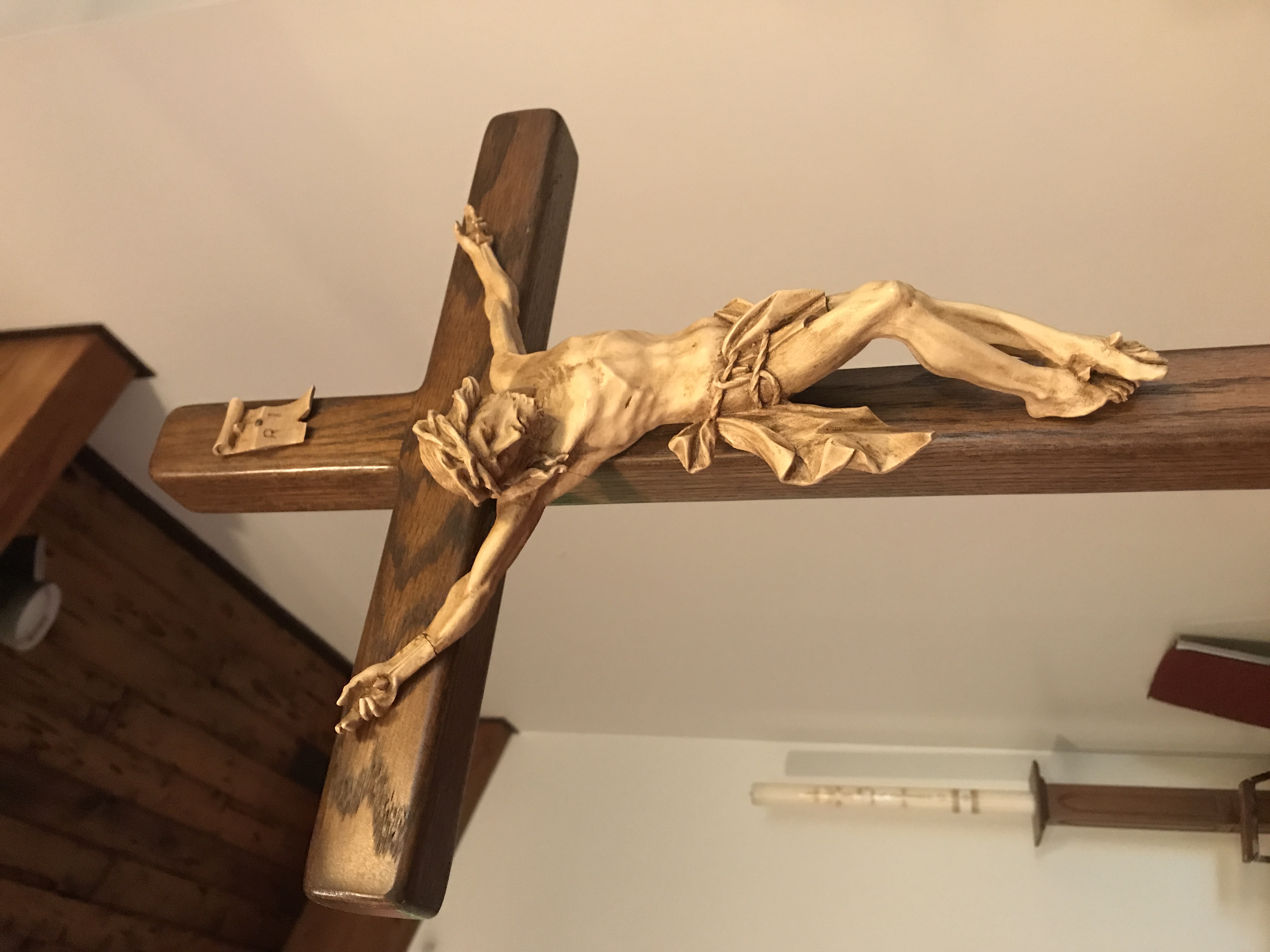
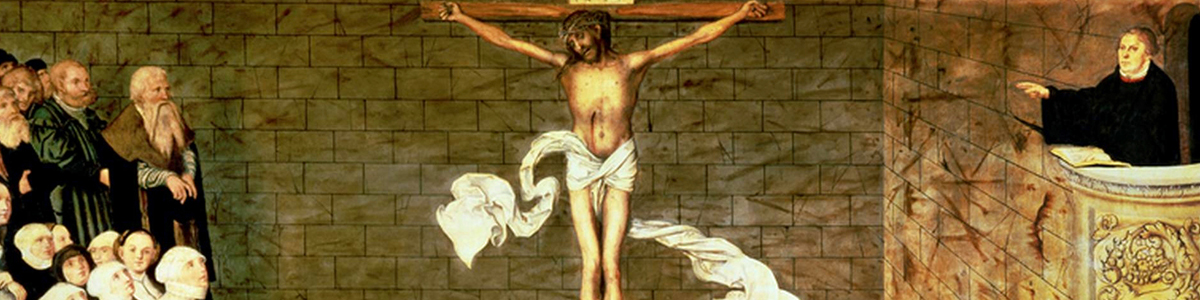
We no further emphasize Jesus in direct ministry battle against Satan and the demons, because as we now shift intently toward the Crucifixion, we see that the wickedness of the hearts of men contain plenty enough evil to get the job of murdering God done in full, gruesome effect. We are in Passiontide, the time of two weeks leading up to Easter in which we remember the suffering of the Lord Jesus, how He was handed over to the Jews who had Him murdered at the hands of the Romans on their cursed tree of death. Just as the dark clouds of a front of thunderstorms looms on the western horizon, so does our remembrance of that dark Friday on which the Paschal Lamb was sacrificed once for all.
There was much hate carried out on that day. The Jews hated Jesus because the people hung on His words and sought Him out, much to their jealousy. Pontius Pilate hated Jesus and the Jews for this problem of theirs that was brought to his doorstep. Oh, that the people would just behave! Most importantly on that day was the divine hate from above, for it was true and necessary for the Father in heaven to hate the Son below. By Him becoming sin Who knew no sin, the righteous wrath from above against all sin and ungodliness was rightfully focused on and fully poured out on the forsaken Son of God.
It was the Holy One of heaven Who stepped down from His glory where He dwelt in harmonious, eternal unity with the Father and the Holy Spirit. He humbled Himself and made His dwelling among us, as one of us, putting on our flesh as a garment, yet Who but the all-gracious and all-merciful God would deign to do such a thing? If you could see clearly into the deep corruption and wickedness in the heart of man that drive us to sin, would you willingly enter the fray of this place and in such humble lowliness? Or would you keep your distance at all costs and despise those trapped in their worldly ways? In His rich mercy, the Son chose to come, sent forth by the Father, and He Who lived without sin, He Who arrived to His final Passover as the pure, unblemished Lamb of God, was again proclaiming the Good News of what He was to accomplish.
This is why He enters into the Holy City, into the Temple, which is His Father’s House, to present Himself as the worthy sacrifice Whose shed blood would be the final atonement needed for all people, for all sinners. The shed blood of God was sufficient to cover, to forgive the sins of the whole world. Thus, He again proclaims the truth to those who were supposed to be stewarding the mysteries of God. Jesus clearly claims to them to be One with the Father, making Himself out to be God in the same substance. He does this by invoking the divine Name as His own, which it is. This revelation is done in hope that we all come to call upon it in hope and joy.
Such a Name was the One in which Abraham trusted. When God showed him the sky and promised that his offspring shall be as numerous as the stars above, he believed the Lord and he counted it to him as righteousness. Abraham trusted the Lord to do what He promises to do. That’s faith and it showed up throughout his life, including when God told him to sacrifice the one son of promise that he had, Isaac. He took that son, his only son, up on the mountain to offer him up as the Lord had commanded, trusting that if God had to raise him from the dead in order to keep the promise about his offspring, then He was able and would do it, for God is true, faithful, and just.
Abraham knew and longed for the promise not just of his offspring, but of The Offspring, the Seed of the Woman, the Messiah. Abraham was a righteous man because he believed this promise of God to be true, too. He rejoiced to see the day of Jesus, and he saw it in the sacrifice of an only-begotten son on the Mount where the Lord will provide and he was glad. In the near sacrifice of his son, Isaac, spared through the Lord’s provision of a ram in his place, Abraham saw and believed the everlasting promise that the Lord will provide for Himself the eternal lamb for a burnt offering. It was the Angel of the Lord, the pre-incarnate Son of God, Who called out to him from heaven and said, “Do not lay your hand on [Isaac], or do anything to him.” It was on that same mountain that the eventual city of Jerusalem came about, in which the temple of the Lord was built, and just outside of which on Mount Calvary the Eternal Father fully followed through with the sacrifice of His only-begotten Son.
That was the Father’s will and Jesus would not be kept from fulfilling it, thanks be to God. Thus, in rebuke of the unbelief of the Jews, the Son of God makes it painfully clear to them that they were dealing with the Lord Himself. This is why the Jews took up stones to throw at Jesus in the temple, because He spoke about God in the first person. Not He, but I. Who called out to Moses from the burning bush? Who commanded Abraham to offer up his son, Isaac? Who told him to stop? Who provided that sacrifice? Who was before Abraham so that He rejoiced to see My day? Who is the sacrifice being provided? I AM, Jesus the LORD, says. It was the Lord doing all those things and in the flesh providing Himself for the Passover sacrifice. He is both the Promise and the Fulfillment.
Jesus hid Himself at their unbelief and rejection of Him, yet today, for those who are righteous by faith in Him, He hides Himself not in judgment, but in blessing, so that when you call out in prayer Judge me, O God, you do so in faith that He judges on account of Christ, in Whom you are seen as pure and without blemish, too, though your sins be many. In the sacrifice of the Son of God, those sins are covered, atoned for, forgiven in full by grace alone. So, for those who come to Him in faith, He still hides Himself; not in judgement, but in relief, in Body and in Blood in, with, and under the bread and wine of Holy Communion. We worship the one true God Who came to be the sacrifice that we could not offer up. By His will we have been sanctified through the offering of the body of Jesus Christ once for all. Because it is the great I AM Who has done this, we march boldly on toward the cross, casting all our sins upon Him and rejoicing in the hope that we have only in His sacrifice for us.
In ✠ Jesus’ Name. Amen.
Comments are closed, but trackbacks and pingbacks are open.