








- Psalmody: Wisdom 1:7; Psalm 68:28b–29a; Liturgical Text; Psalm 33:6; Psalm 68:28b–29; Acts 2:2, 4a, 11b
- Lection: Genesis 11:1–9; Acts 2:1–11; John 14:23–31a
In the Name of the Father and of the ✠ Son and of the Holy Spirit. Amen.
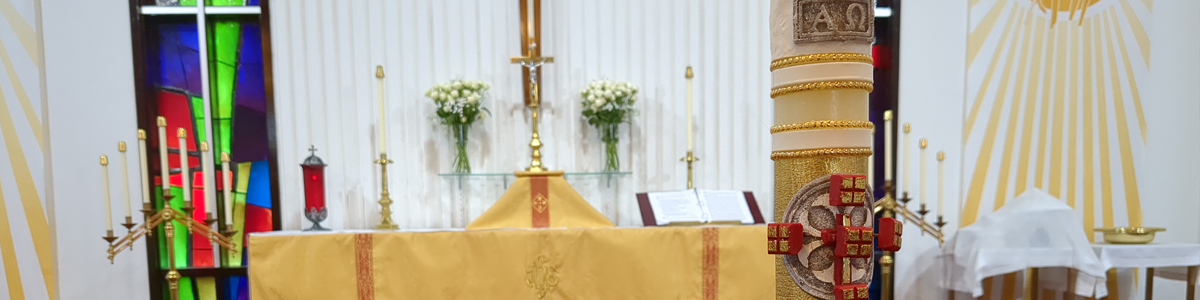
When the Day of Pentecost had fully come, they were all with one accord in one place. With these words, God invites us to be in accord with one another, and more so, with Him; to be in one place of mind, heart, and, yes, body regularly gathered around the reading of His Word, the breaking of bread, and the prayers. He invites us by His Word to look back upon what is considered the birth of the Church at Pentecost, to give thanks for what has been given, and to consider what this means for the Church going forward, even for our own little iteration of it here on Wallings Road. To have true, godly hope for the future, let us choose our perspective wisely as to where we look back and how, so that we step faithfully into the future the Lord intends.
In our assessment of the Holy Christian Church as she is, we tend to look back longingly at what was and rarely ahead to what could be. With disgruntled eye and wrinkled brow, we look at the glorious peak within living memory from which we seem to be descending rather rapidly as if we’ve stumbled and now tumble head-over-heels wondering how much pain will come by the tree or boulder likely to be encountered on our way down further from the peak. Maybe we stumble because our gaze is backward, up at that recent peak, and not ahead, wishing that we could’ve made there tabernacles for Jesus and ourselves to remain. We look back with mournful nostalgia to glory days of 50, 60, 70 years ago when Christianity seemed to be the enthusiastic standard around which all Sunday schedules and more revolved. Pews full, buildings built, choirs singing, church accounts stout. But should we not look back further, if we are to look back? And in looking back, should we not measure all times not by how man responds, or fails to in sinful unpredictability, but to how God’s mission in and through the Church remains as steady as He is?
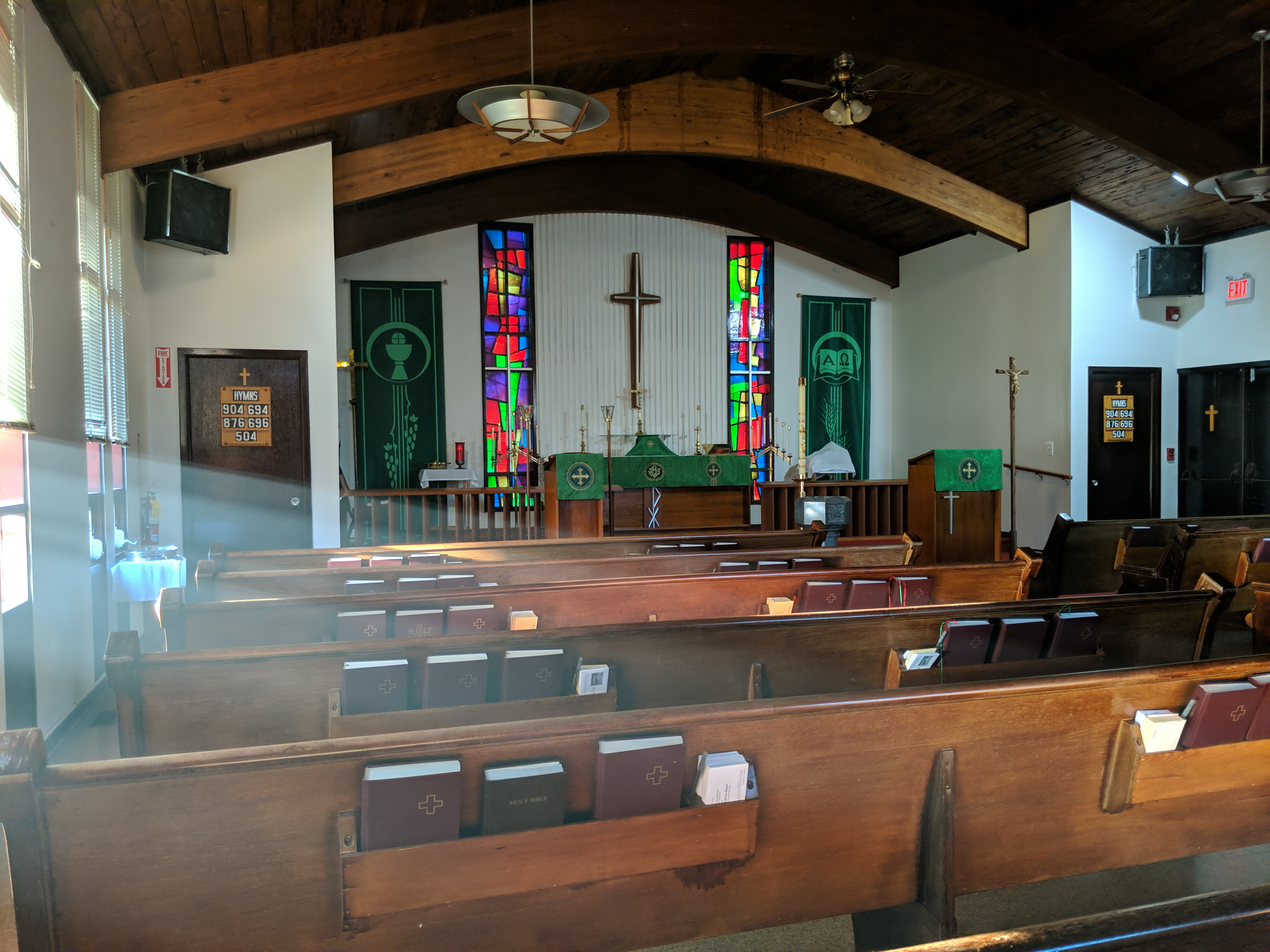
To be in such a descent, such a decline, tempts us, even as the people of God, to shift our minds, our hearts, our worries, and our hopes to all the horizontal, practical matters of how the Church, how our church, can possibly continue on as if earthly factors are what reign omnipotent and determine The Kingdom’s success. The degrees of this vary in how much we occupy our thoughts with what we don’t have and how success, as we would measure it, just doesn’t seem possible with the cards we now hold. Does your mind measure our congregation, much less our church body, by the resources she doesn’t have and therefore her possibilities limited, if even that? That not one of us here lives in North Royalton, but a good portion beyond many communities, many churches, many miles? That we have no organ but are at the mercy of temperamental technology by which to sing along? That we have interesting tastes in stained glass, whether real or window film? That to say our whole building is meagre would be to put best construction on it? That we aren’t bustling with churchgoers and members like some of the other ”churches” in our area? That we’re making ends meet by means of a savings account that, too, is in steady decline and will most certainly, painfully stop when it comes to the stone-shaped zero at the bottom? That, by all our thinking, or belief, we don’t have what we need to thrive, and by that understanding, don’t have what we need to continue to exist as a congregation? If these are the points upon which we base our trust, our hope, our joy, then it is time we repent. It is time to turn away from earthbound takes on things that cause us to forget Who God is, what He desires, and how He accomplishes it. He has given none of those things to rule over us; to rule over His Church. Such an exalted position is one for which He is jealous. We cannot look to them as we should to Him. His are a cattle on a thousand hills. By His word were the heavens made; and all the host of them by the breath of His mouth. Alleluia.
But, if compare we must, let us look not back upon the peak from which our generation so freshly tumbles, but back, back to our birthday, to Pentecost and to all the plenteous peaks and vexing valleys lying between here and there, for they are near countless, yet the Church still stands. She lives just as her Redeemer lives. Look back to this redeemed group that had gathered all with one accord in one place. Measure their resources. Measure their practical outlook and then reconsider our own. They had no buildings, no pews, no hymnals, no savings, no seminaries, no tax exemptions, no circuits, no synods. Yet they gathered in resurrection joy awaiting God’s promise from on high; living in it, trusting in Him. Though we are descending from a peak, when compared to these brothers and sisters by practical measures, we still abound immeasurably more, earthly speaking. So, if we were to then measure potential by resources possessed, would not our hope have reason to exceed theirs? And yet, what became of them? We did, thousands of years of Christian legacy proving God’s might, intention, and means.
So, again, our hope is not in earthly resources, as we see theirs rightfully not on Pentecost. All hope is from heaven, for however we plant, however we water, it is God Who gives the growth. He adds to His kingdom not by earthly resources, but by Power from on high; Power that convicts to world of sin, righteousness, and judgment whenever and wherever His Word is treasured and shared. He adds to His kingdom, not by our own wisdom or strength, but by the call of the Gospel and the enlightenment of the Spirit’s gifts.
And suddenly there came a sound from heaven, as of a rushing mighty wind, -Yes, “Come from the four winds, O breath, and breathe on these slain, that they may live.”- and it filled the whole house where they were sitting. -wherever there is the Spirit and the Word, the house is filled with what is needed for the slain to be made alive- Then there appeared to them divided tongues, as of fire, and one sat upon each of them. And they were all filled with the Holy Spirit and began to speak with other tongues, as the Spirit gave them utterance. Even unto today, English is the language of the land, so you need not pray for the gift of tongues that you may speak the Gospel of Christ, for your neighbor will likely understand what you have to say about Him. The power of the Church to spread is not in its finite resources, but in the Spirit, the holy Fire, comfort true, Who has descended upon all who now belong to it, Himself igniting burning flame within that desires to spread. By nothing else, by no one else can the Church look back with joy and ahead with hope, no matter the resources we have, no matter the resources we lack.
The wonderful works of God we have heard, we have believed, we have made sure to have for our own, in response to the Spirit’s work. This Good News is not one to be hoarded. It could not be contained in Jerusalem, or in all Judea and Samaria. It was given to go unto the end of the earth. It makes it there, into whatever end we, the Church, find ourselves, by the hope that we have within us being spoken to others that their hearts, too, may be enkindled. It is the Lord’s doing to see to it that His Church continues to possess the treasures from above that resurrect dead hearts and spur them all to be with one accord in one place. It is then the Church that has the joyous looking, not only back, but ahead to seek and to discover how she might give these fiery, purifying, limitless treasures away.
In ✠ Jesus’ Name. Amen.
Comments are closed, but trackbacks and pingbacks are open.